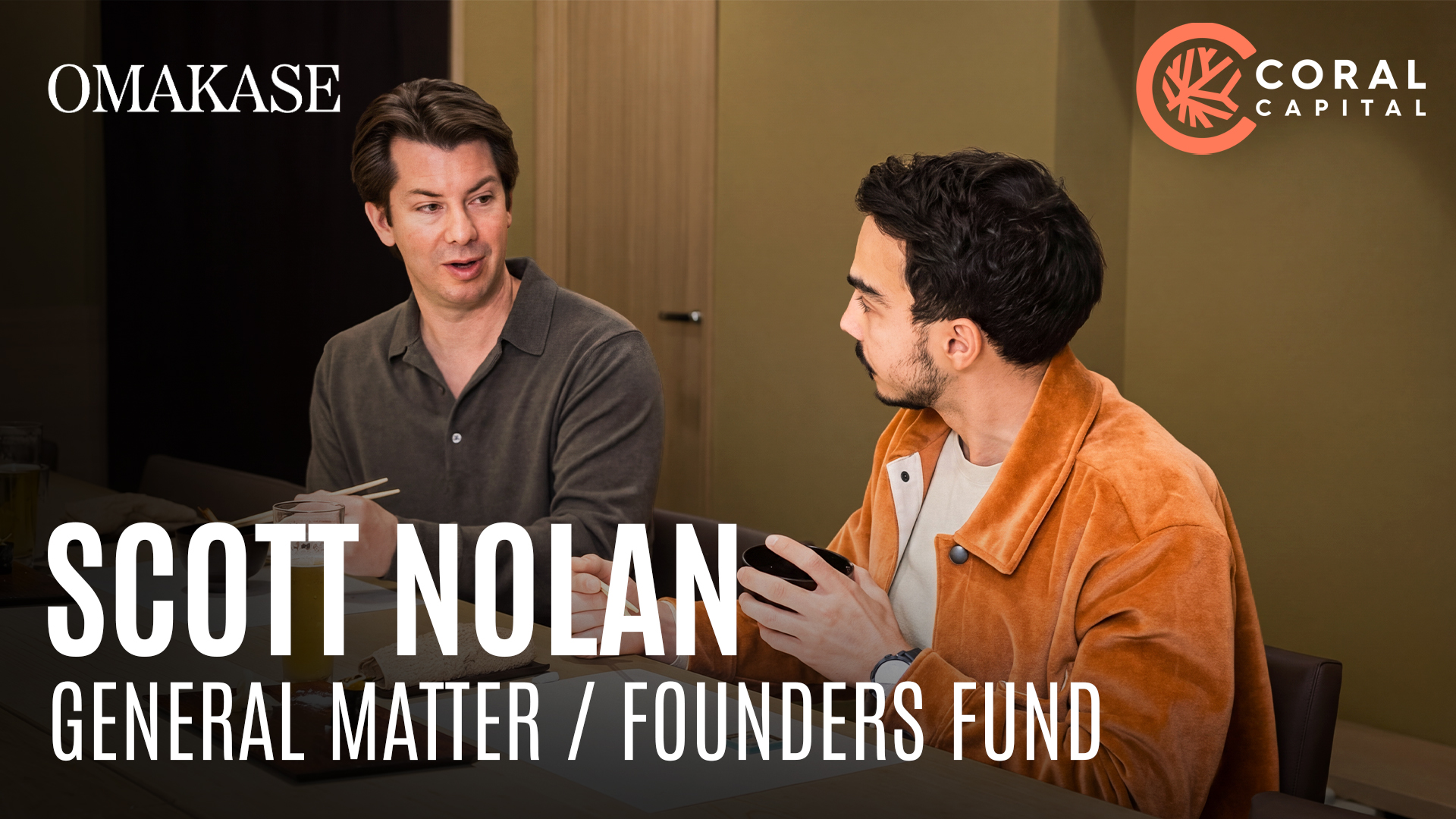
Omakase is a Japanese word that means “I’ll leave it up to you.” In this style of dining, the chef decides everything. You trust the process. For this interview series, I sit down with people I respect over omakase right here in Tokyo, and let the conversation go wherever it wants to go.
My guest this time is Scott Nolan. Scott was employee ~30 at SpaceX, where he worked on the Merlin engine systems and Dragon capsule. He spent over a decade at Founders Fund backing companies like Anduril, Radiant, and Crusoe Energy. And in 2023, after spending a year searching for a company solving America’s nuclear fuel gap and finding none, he started one: General Matter.
Scott and I have known each other for years. Founders Fund was one of the first LPs in Coral Capital, back when we were a small team with a big thesis about Japan. So when he told me what he was building, I paid attention. When he explained the supply chain, I realized this was not just an American problem, but also a Japanese one.
The United States once controlled 86% of global uranium enrichment. Today that number is effectively zero. The last domestically owned enrichment facility shut down in 2013, in Paducah, Kentucky. Russia stepped in and owns close to 50%. Europe filled the rest. And China is scaling fast, projected to reach 30% of global capacity within the next decade.
Now look at Japan. After the 2011 earthquake, Japan took all 50 of its reactors offline. Today, 14 or 15 are back online, generating about 8-9% of the energy mix, with a government target to reach 20% by 2030. Japan currently imports virtually all of its enriched uranium from France and European consortiums. After the Ukraine conflict, imports from Russia were cut entirely. That means Japan is once again dependent on a single source region for a critical energy input.
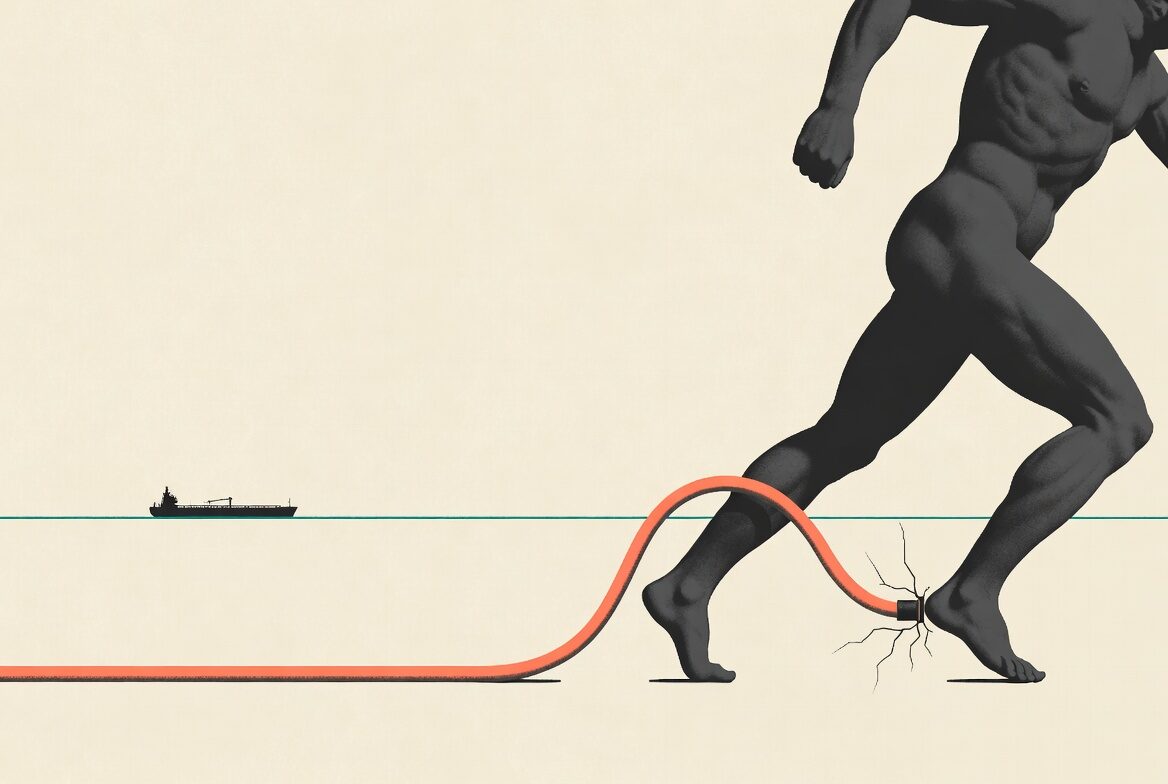
If this sounds familiar, it should. In 1941, it was oil from the U.S. In the 1970s, it was oil from the Middle East. Today, with the Strait of Hormuz under threat, 70% of Japan’s oil imports are at risk. Energy security is not an abstract concept here. It is something the Japanese economy has been painfully reminded of, over and over again.
This is why General Matter matters for Japan.
In January 2026, General Matter received a $900 million milestone-based contract from the U.S. Department of Energy to produce HALEU (high-assay low-enriched uranium), the fuel that next-generation reactors need. Then, right before this conversation, General Matter announced a $2.4 billion letter of interest from the U.S. Export-Import Bank to finance Japanese utilities purchasing American enriched uranium over the next ten years. That deal was announced right here in Tokyo, at the Indo-Pacific Energy Security Ministerial.
Scott is building General Matter’s first facility on the exact site in Paducah, Kentucky where America last did enrichment. The team comes from SpaceX, Tesla, Anduril, the national labs, and the nuclear industry. Peter Thiel sits on the board. He almost never joins boards.
In this episode, we talk about:
- Why nuclear fuel is such a critical bottleneck for global energy demand, especially for the United States and Japan
- Why the U.S. let its enrichment capability atrophy
- Why the SpaceX playbook applies to enrichment
- How Japan fits into General Matter’s supply chain in both directions
- What the next five years look like
Scott is building something critically important. And it is not just important for America. For a country like Japan, which has a 10% energy self-sufficiency ratio and has been burned by supply chain dependency more times than any developed nation should have to endure, this might be the most consequential energy partnership of the decade.
You can listen to the full episode on Spotify, Apple, and YouTube.