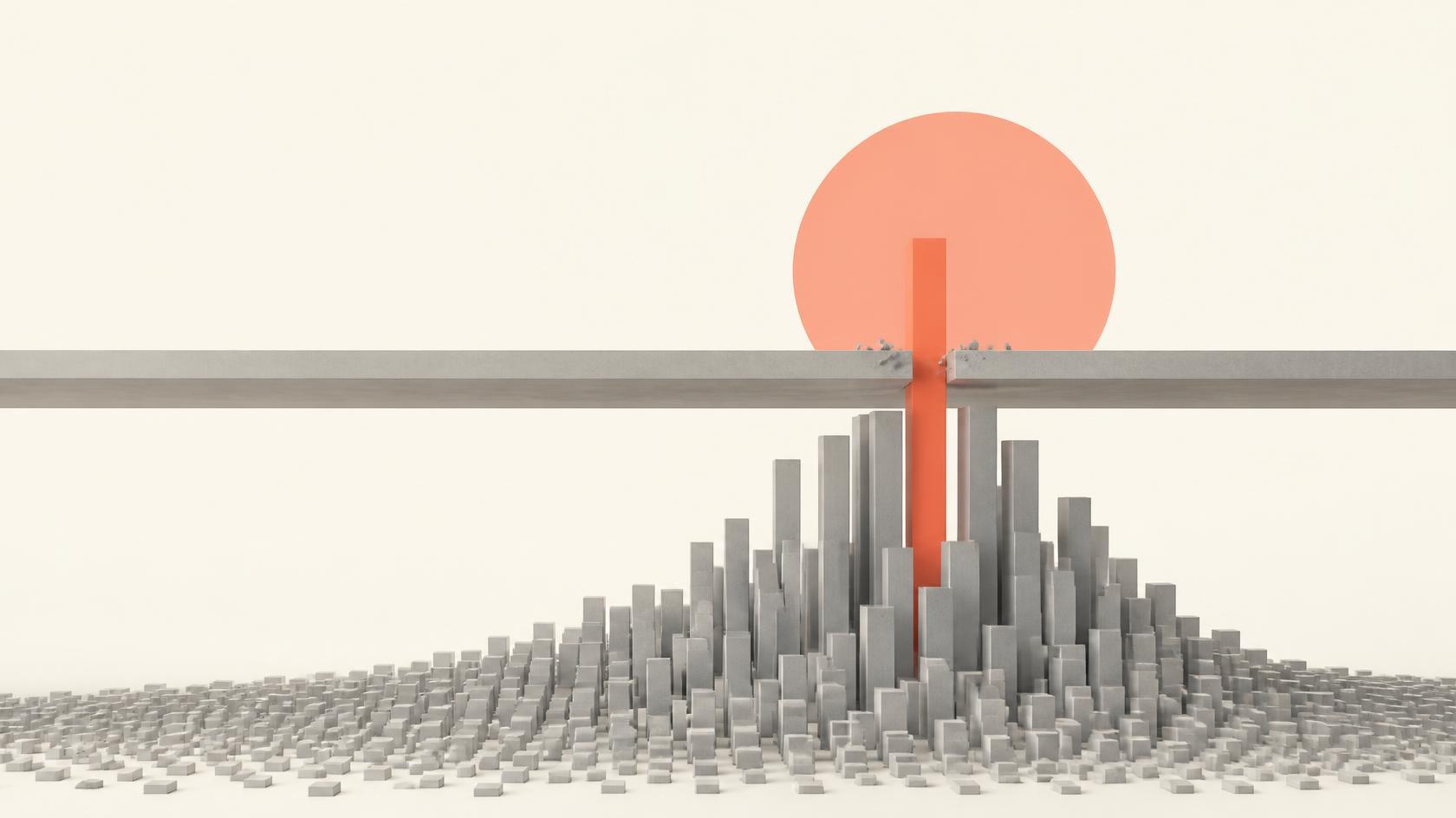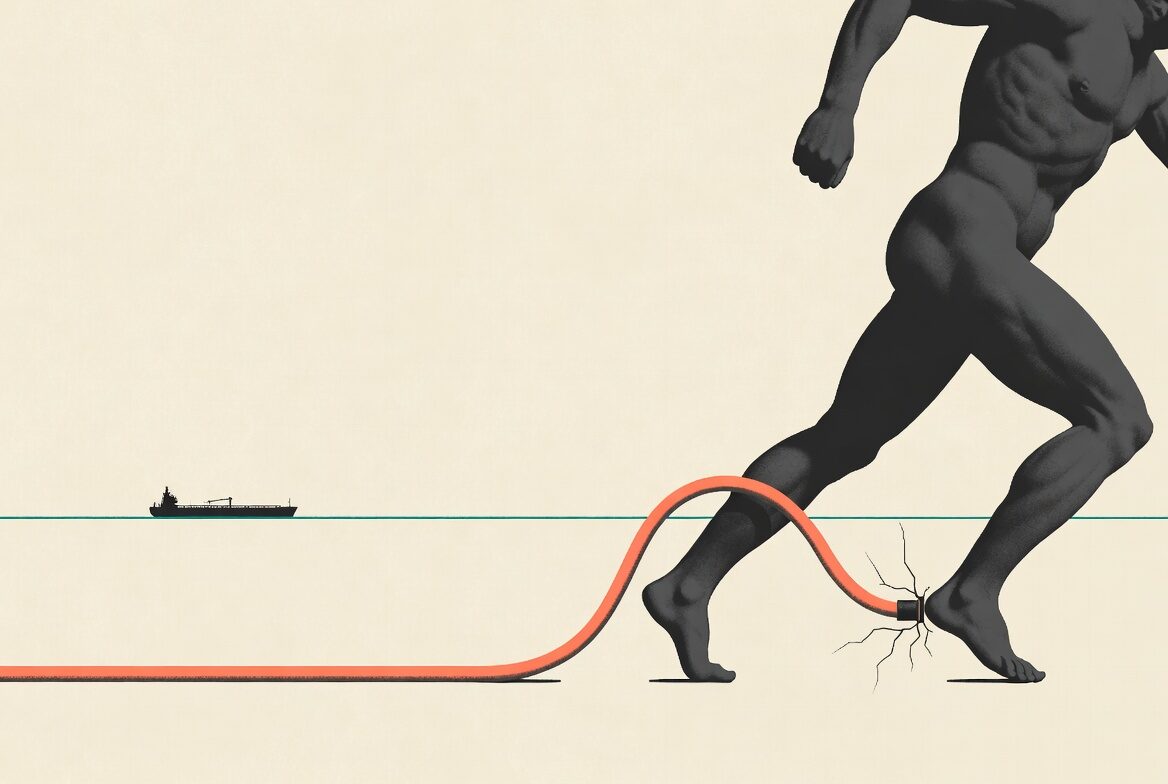
For the past two decades, while the West was digitizing the world (software eating the world, as Marc Andreessen famously put it), Japan was perfecting the atoms. They doubled down on monozukuri, specifically in the unsexy, high-margin niches of precision motion control. The result is a structural asymmetry in the global robotics stack that few investors have fully priced in: The US controls the neural networks, but Japan controls the nervous system.
If the US wants real, functional robots that can survive a 10,000-hour duty cycle in a factory rather than a 5-minute demo on X/Twitter, Japan is here to the rescue.
The World of Atoms vs. Bits
In the software world, marginal costs approach zero. You write the code once and deploy it to a billion users overnight. Mistakes are cheap. You push a patch. This “move fast and break things” philosophy is the engine of American innovation.
But in robotics, physics is the ultimate arbiter. There is no “beta” for a reducer gear holding a 50kg payload above a human worker. If it fails, it doesn’t crash an app. It breaks a bone.
The body of a humanoid robot is an engineering nightmare of competing constraints. Strong but lightweight. Blinding speed but sub-millimeter precision. Massive heat dissipation without cooking its own battery. And it needs to do this millions of times without fatigue.
This is where Japan excels. It is not simply a moat of intellectual property, although they have plenty. It is a moat of process: the accumulation of tacit knowledge, what the Japanese call anmoku-chi. It resides in the hands of engineers who know exactly how a specific alloy responds to heat treatment, or the exact viscosity of grease required to prevent a harmonic drive from seizing at -10°C.
The 10,000-Hour Reliability Cliff
The single biggest misconception in the humanoid hype cycle is the difference between a demo and a deployment.
A robot that looks impressive dancing in a pre-programmed video is operating under “Short-Duration Peak Performance.” It pushes its motors and gears to the limit for a few minutes. But industrial customers don’t buy demos. They buy uptime. An automotive factory runs around the clock. A robot on that line needs a Mean Time Between Failures of 5,000 to 10,000 hours.
This is the Reliability Cliff. Most entrants from the software-first ecosystem, and many low-cost Chinese clones, fall off this cliff at around the 1,000-hour mark. Their gears develop backlash, their lubricants break down, and their positional accuracy drifts.
Japanese companies like Harmonic Drive Systems and Nabtesco have spent fifty years solving these problems. They have mastered the black art of tribology, metallurgy, and heat treatment.
Consider the precision reducer. It is the heart of the robot joint. It converts the high-speed, low-torque output of a motor into the low-speed, high-torque motion needed to lift an arm. A standard gearbox has backlash: a tiny gap between gear teeth. In a car, this is fine. In a robot, a microscopic gap at the hip amplifies into a massive wobble at the hand. You cannot efficiently program your way out of mechanical slop. While advanced AI and neural networks can attempt to dynamically compensate for microscopic gear wobble, constantly calculating and correcting these physical imperfections drains massive amounts of compute and battery life.
Japanese reducers use strain wave gearing (Harmonic Drive) and cycloidal gearing (Nabtesco) to achieve zero backlash. This is not a technology you can simply reverse engineer. It is a process technology, relying on how the steel is tempered, the microscopic geometry of the teeth, and proprietary lubricants. Despite decades of effort and massive state subsidies, China still imports the vast majority of its high-end reducers from Japan.
Harmonic Drive’s key invention is a flexible steel cup, the flexspline, that deforms elastically to engage multiple teeth at once, eliminating the gap while maintaining efficiency. But you are asking a thin cup of steel to bend and unbend millions of times under heavy load. This requires steel of incredible purity and a heat-treatment process closer to swordmaking than manufacturing. If the steel has a single microscopic impurity, the cup will crack. Competitors often find their gears last 500 hours before fatigue sets in. Harmonic Drive’s gears last 20,000 hours. That difference is everything.
Japan’s Got A Hidden Oligopoly
If you peel back the skin of almost any high-end robot today, whether it is building cars in Germany or sorting packages in an Amazon warehouse, you will find Japanese logos inside.
The US dominates the Brain. China is aggressively pursuing Integration. The Body is overwhelmingly Japanese. This dominance is not accidental. It is the result of keiretsu structures and long-term capital allocation strategies that prioritize generational survival over quarterly earnings. While American firms were outsourcing manufacturing to boost margins, Japanese firms were vertically integrating to secure quality.
The Muscle: Harmonic Drive Systems makes the light, compact gears used in robot arms, wrists, and fingers. Nabtesco makes the heavy-duty cycloidal gears for shoulders, hips, and knees, controlling roughly 60% of the global market for industrial robot joints.
The Nerves: SMC controls 64% of the Japanese pneumatics market and nearly a third globally. Keyence generates software-like margins, over 50%, on hardware sensors, providing machine vision that lets robots see with metrological precision. And behind those machine vision systems are the eyes themselves: Sony manufactures the silicon CMOS image sensors that allow these robots to see, holding a staggering 53% of the global market share.
The Skeleton: THK pioneered the Linear Motion Guide and is now developing actuators specifically for humanoid hands. Alongside them are friction-reduction titans like NSK and NTN, whose sheer market dominance underscores Japan’s absolute chokehold on the structural components required to keep machines moving. NSK is the undisputed number one bearing supplier in Japan and the third largest in the world by market share. Meanwhile, NTN is the fourth largest bearing manufacturer globally. When looking at critical mobility components (technologies that are rapidly being adapted for robotics and automation) NTN commands the world’s number one market share in hub bearings and the second largest global share in driveshafts. Together, these Japanese giants control a massive, inescapable plurality of the global high-precision bearing market, proving that if the US wants its robots to actually move, they have to buy the joints from Japan.
The consensus view is that China will commoditize these components, just as they did with solar panels and EV batteries. It’s not that easy. In solar, the primary input is silicon: a commodity. In precision gears, the primary input is process know-how accumulated over decades. China’s Leaderdrive is making inroads in the low-to-mid market, but for high-performance applications where failure is not an option, the premium for Japanese reliability is an insurance policy that OEMs are happy to pay.
The Magnet Wars: Japan’s Got An Escape Hatch
If gears and bearings are the muscles and bones, magnets are the lifeblood.
Every efficient electric motor in a robot relies on neodymium sintered magnets. And here we encounter the most dangerous bottleneck in the robotics supply chain: China controls the entire vertical stack. They mine the ore (over 60% global share), refine the oxides (over 85%), and hold a near-monopoly on heavy rare earths, dysprosium and terbium, needed to make magnets heat-resistant. Without these elements, a neodymium magnet loses its magnetism at high temperatures. In a robot joint generating immense heat, the magnet cooks. This thermal demagnetization is irreversible. Once it happens, the joint is dead.
This is a geopolitical predicament. China has demonstrated willingness to weaponize this supply chain, notably during the 2010 embargo against Japan. For robotics companies, relying on Chinese magnets is systemic risk akin to building a strategic industry on a foundation of sand.
But Japan has been quietly preparing. Proterial (formerly Hitachi Metals) and Shin-Etsu Chemical have developed heavy rare earth-free sintered magnets using a process called Grain Boundary Diffusion. They engineer the magnet’s microstructure to achieve high heat resistance without dysprosium or terbium. In July 2025, Proterial announced that these magnets had entered sample shipping, with their most advanced, ultra-high-heat grades slated for the next phase of deployment by April 2026.
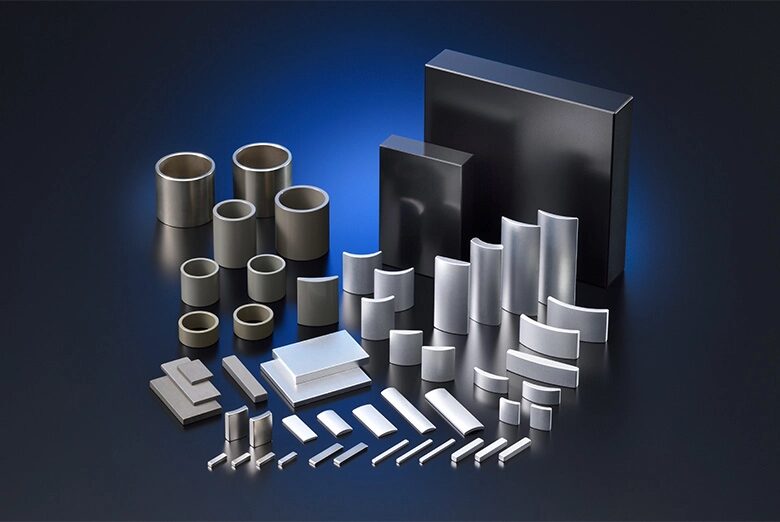
This is a massive strategic unlock. It decouples magnet pricing from volatile rare earth markets, bypasses China’s monopoly, and allows Japan and the US to source base neodymium from friendly nations like Australia’s Lynas, processing it into high-performance magnets without touching Chinese soil. Japan is building a parallel supply chain for the West. The US and Japan formalized this with the Framework for Securing the Supply of Critical Minerals, signed in October 2025.
Physical AI: Japan’s Got Data
For years, the criticism of Japanese robotics was that they were dumb. Mechanically perfect, infinitely durable, but unable to think. They ran on rigid code. If you moved the part one inch to the left, the robot grabbed at thin air.
The US, meanwhile, was building smart robots that could reason and adapt but were mechanically brittle.
We are now witnessing the convergence. Japan is moving faster than people realize. METI has launched a new strategy focused on Physical AI and Software-Defined Robots. The thesis is straightforward: you cannot train a Large Motion Model without real-world physical data: torque feedback, friction coefficients, thermal drift. Simulations alone are insufficient. Japan has more of this data than anyone. While the US may be leading in unstructured, generalized behavioral data needed for AGI, Japan has a monopoly on the precise tribological and stress data required to keep a machine alive.
According to Japan’s Ministry of Economy, Trade and Industry (METI), Japanese manufacturers hold an impressive 70% of the global market share for industrial robots. Companies like Fanuc alone have hundreds of thousands of robots deployed worldwide, and when combined with fleets from Yaskawa and Kawasaki, Japan controls a massive plurality of the world’s physical data-gathering endpoints.
In 2025, Prime Minister Takaichi announced a 10 trillion yen (approximately $65 billion) support framework for AI and semiconductors, with a significant portion earmarked for Physical AI. The vision is a Neural Simplex architecture: instead of the US Brain sending high-level commands to a dumb Japanese Body, the Japanese hardware develops its own onboard intelligence, trained on decades of physics data, handling immediate motor control. The US Brain focuses on the what (“Make me a coffee”) while the Japanese Body handles the how (“Adjust grip force to 3 Newtons to avoid crushing the cup”).
Build with Japan
The narrative that the US can win the robotics race on its own makes for great propaganda, but it is unrealistic. The US may be winning the battle for the mind. But it is woefully unprepared for the battle for the body.
The idea that the US can reshore production of precision harmonic drives or sinter its own magnets in Nevada by next year is a fantasy. These are industries built on decades of tacit knowledge, deep supply chains, and specialized equipment.
The battle for robotics dominance is not a story of the US vs China. China would likely win that battle. It is a story of the US & Japan (and allies) vs China.
To be sure, China is looming. They are fast, well-funded, and ruthless, treating humanoid robotics as a massive state-sponsored priority on par with EV production. But they are still playing catch-up on the Reliability Cliff. The real question is whether China can reverse-engineer the 10,000-hour reliability threshold before the US and Japan fully integrate their Brain-Body alliance. For now, and for the foreseeable future, if you want a robot that works, you need to knock on Japan’s door.
TL;DR: American robots will have Japan Inc written all over them.