In 1543, Portuguese traders arrived at Tanegashima and introduced firearms to Japan. The Japanese were so taken with the technology that they commenced indigenous gun production, rapidly improved the designs, and by 1600 owned more and better guns than any country on earth. Then the Tokugawa shogunate did something extraordinary: it systematically reversed course, restricting production to a few cities, requiring government licenses, and eventually eliminating functional firearms almost entirely. Japan chose to suppress its own military-industrial capability. The policy held for 250 years.
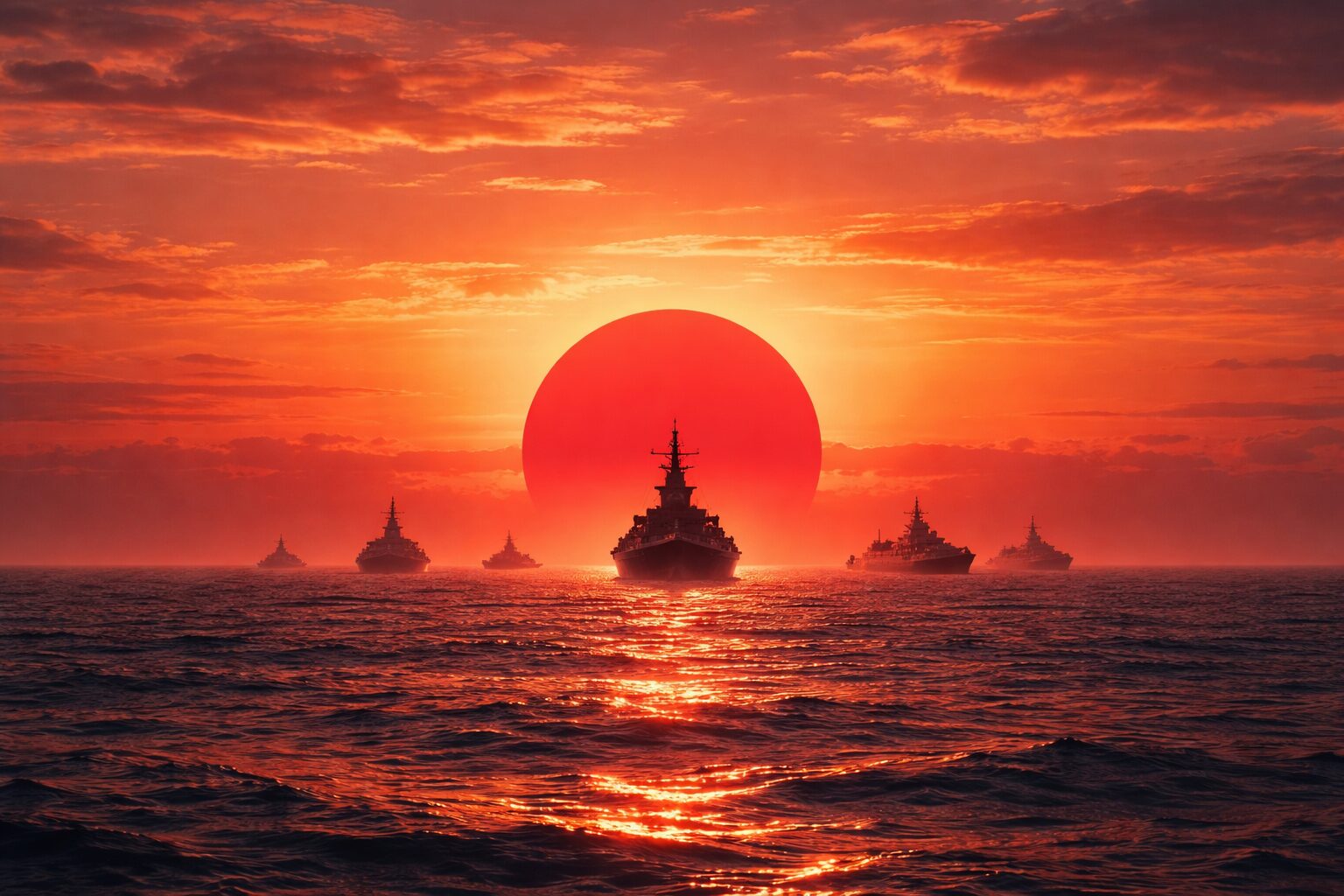
In 1853, Commodore Perry’s Black Ships steamed into Edo Bay with guns pointed at the seat of the shogunate. Japan had two choices: modernize or get colonized like the rest of Asia. It chose to modernize, and it did so at a pace that stunned the world. The Meiji government dismantled the feudal system, built Western-style shipyards and arsenals, sent delegations to study Prussian military tactics and British naval engineering, and adopted a national motto that doubled as a strategic plan: “Enrich the Country, Strengthen the Military.” Japan caught up with Western industrial models in less than fifteen years. By 1905, its navy destroyed the Russian fleet at Tsushima, the first time in modern history an Asian power had defeated a European one. Fifty years from forced opening to great power status. No country had industrialized faster.

Then the cycle repeated. In 1946, the American occupation drafted Japan’s constitution in a single week. Article 9 renounced war. Japan was, once again, a country that suppressed its own military-industrial potential. Except this time, it wasn’t entirely Japan’s choice. The Americans wrote the rules.
And then the Americans changed their minds. As John Dower documented in Embracing Defeat, before the Korean War even broke out, Washington was already pushing Tokyo to rebuild its military. The Cold War made pacifism inconvenient. Dower called this the “reverse course.” Japan complied, up to a point. It established the Self-Defense Forces in 1954, built a capable military, and became a linchpin of American security architecture in the Pacific. But it drew a firm line at the border: Japan would defend its own territory, not project power abroad, and it would not become an arms exporter.
Meanwhile, the country’s best engineering talent poured into the commercial industry. The postwar generation set out to achieve in business suits what the wartime generation had failed to bring about in uniform. They succeeded beyond anyone’s expectations. And many of the companies that defined Japan’s commercial miracle have military origins that most people have forgotten. Nikon (our LP), which built submarine periscopes and the 15-meter rangefinders on the battleship Yamato, pivoted to cameras. Fujifilm, which produced military optical glass and aerial imaging materials, pivoted to consumer film and eventually pharmaceuticals. Nakajima Aircraft, Japan’s largest wartime aircraft manufacturer with nearly 26,000 airframes produced, was dissolved by the occupation, then reborn as Fuji Heavy Industries, which became Subaru. There are countless similar examples. The engineering DNA didn’t change, but the products did.

Earlier this month, I visited Dai-ichi Life (our LP). Most people walk through the lobby without knowing that this is where MacArthur established his General Headquarters (GHQ) in 1945, where his young staff drafted Japan’s constitution in a week, where Article 9 was written. Given the timing, I asked for a tour of his sixth-floor office, which is preserved as a memorial. Eighty years later, the country whose constitution was written in those very rooms is preparing to rewrite it.
On February 25, 2026, Japan’s ruling coalition voted to end eighty years of weapons export restrictions. The LDP and Ishin finalized a proposal to scrap limitations. Warships, interceptor missiles, fighter jets: all now eligible for export. The government plans to formally revise the defense equipment transfer guidelines within weeks.
Make no mistake, Japan is rearming. But there are a lot of details people miss.
Japan Isn’t Catching Up
The Western narrative frames this as Japan “catching up” to other countries. But Japan isn’t starting from zero. It already transferred Patriot missiles to the United States last November. Australia selected Japan’s Mogami-class frigate for its surface combatant program. The Philippines is in discussions about Japanese air defense systems. The US Navy cancelled both its hypersonic missile program and the Constellation-class frigate in 2025; in both cases, Japanese solutions are filling the gap.
What’s changing isn’t capability, but permission.
Japan’s defense budget hit ¥11 trillion this year, reaching the NATO 2% of GDP standard two years ahead of schedule. Defense is now one of seventeen officially designated strategic sectors. ATLA, Japan’s defense procurement agency, announced a new fast-track system for startup procurement. And perhaps most significant of all: the LDP’s landslide in the February 2026 election gave it 316 seats in the House of Representatives, more than any party in Japanese electoral history, and enough to clear the two-thirds threshold required to propose amending the constitution. The LDP-Ishin constitutional revision committee is already drafting amendments to Article 9, the very clause MacArthur’s team wrote in 1946, with the goal of formally recognizing the SDF and enabling collective self-defense. The upper house and a national referendum remain hurdles, but the direction is unmistakable. The pieces are moving simultaneously: budget, export policy, procurement reform, and now the constitutional architecture itself.

But the real story isn’t about Japan building a defense industry from scratch. It’s about Japan exporting the defense capabilities it already has, capabilities that its allies have been quietly depending on for years.
The Arsenal You Didn’t Know About
When I attended Anduril’s Japan launch event in December 2025, what struck me was that dozens of Japanese companies were there, and many of them were already Anduril suppliers. These weren’t companies hoping to break into the defense supply chain. They were the defense supply chain, and had been for years, without most people outside this world realizing it. At the event, Palmer Luckey unveiled a drone called Kizuna, built entirely from Japanese components. No Chinese parts. Toshiba batteries, Japanese precision motors, Japanese manufacturing throughout. Luckey put it plainly: “Japan is one of the only countries that can do it all on their own.” The drone is American in brand and software. It is Japanese in every physical component. And Luckey made clear the ambition goes further: “The next step in our relationship with many of these companies is to not just use their components for building systems for the United States, but also systems that are built in Japan, for Japan.”

The pattern extends well beyond drones. One of our portfolio companies recently won a contract under the US Missile Defense Agency’s SHIELD program and is positioned to contribute to Golden Dome, America’s most ambitious missile defense initiative since Reagan’s Star Wars. Another, Oceanic Constellations, is building swarm-controlled unmanned surface vessels for maritime surveillance, partnering with NYK Group’s Keihin Dock to establish what would be the first USV mass-production line inside a Japanese shipyard. Japan is an archipelago nation with the world’s third-largest shipbuilding capacity. If you want autonomous maritime defense at scale, the manufacturing base is in Japan.
These aren’t isolated anecdotes. They’re evidence of a structural reality that predates the policy change: America’s defense industrial base already depends on Japan. The February 25 vote simply accelerates that.
The Irony at the Center
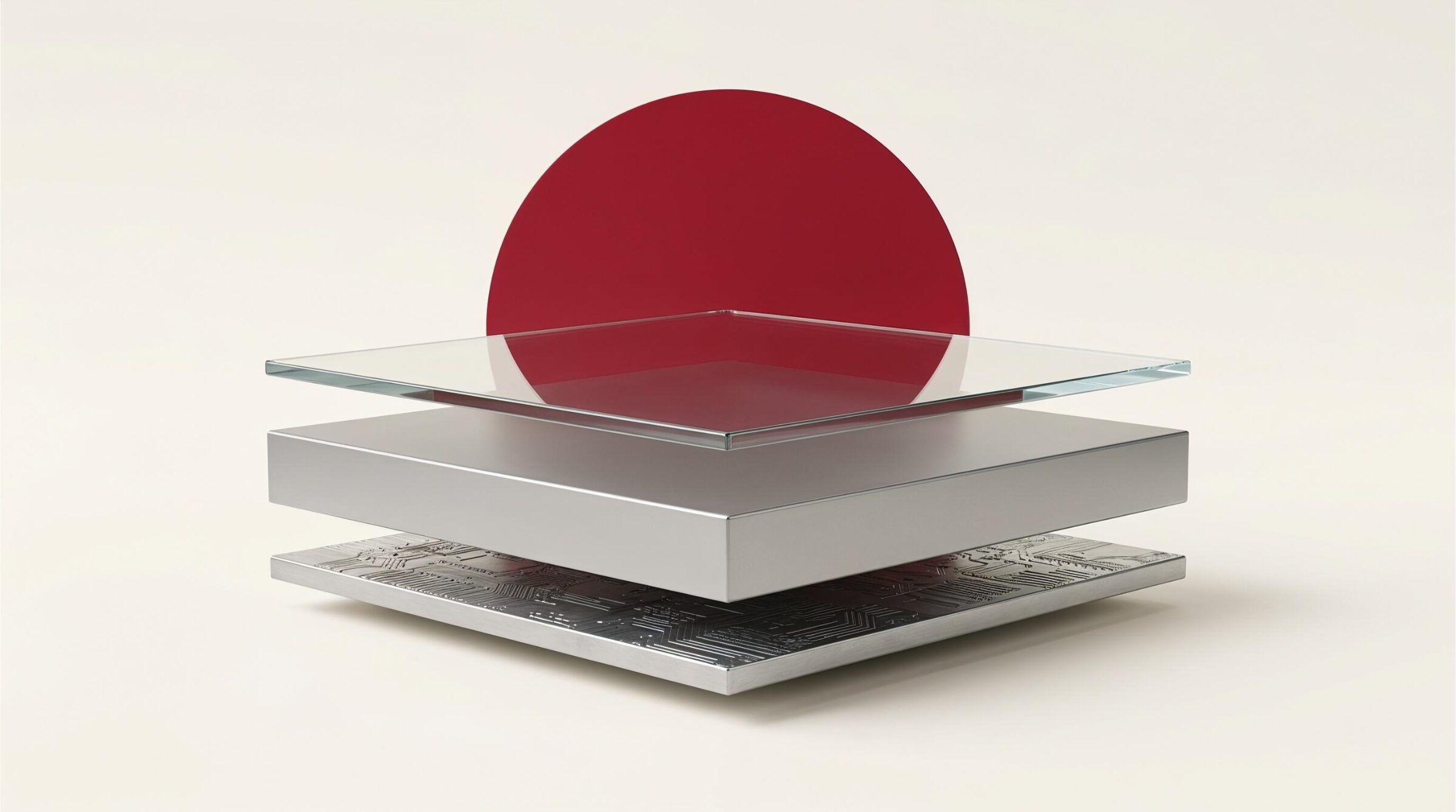
There is a deep irony in all of this. Japan did rearm after 1945, but only defensively. The strict export restrictions meant that Japan’s defense industry existed in a closed loop: it built equipment for the SDF and nothing else. That constraint had a massive second-order effect. Because Japan couldn’t export weapons, the economic incentives pushed its best engineers into commercial manufacturing. Because defense wasn’t a growth market, talent flowed into the industries that could scale globally: automotive, semiconductors, precision machinery, robotics. Japanese companies hold 92% of the global market for photoresists, the chemicals essential to semiconductor fabrication. They hold 64% of the market for manufacturing automation equipment. As of 2022, 45% of all industrial robots in the world were designed or produced by Japanese companies.
Pacifism turned out to be an advantage. Japan spent eighty years building the most capable precision manufacturing ecosystem on earth, and now the world’s largest military needs that ecosystem to function.
The cycle that began at Tanegashima is completing itself again. External pressure from America forced Japan to disarm. Then external pressure from America pushed Japan to rearm. Japan rebuilt its military but refused to export what it built, and in doing so, concentrated its engineering talent in the commercial industries that now underpin many of the most advanced weapons systems on earth.
What Comes Next
The implications run in two directions.
For most US defense startups, Japan isn’t optional. If you’re building hardware, drones, satellites, autonomous systems, or anything that requires precision manufacturing at scale, your supply chain likely runs through Japan whether you’ve mapped it or not. The companies that recognize this early and build relationships with Japanese suppliers and co-development partners will have structural advantages that their competitors won’t easily replicate.
For Japan, the question is whether it can produce its own generation of defense technology startups, not just serve as the supply chain for American ones. The talent exists. The industrial base exists. The government demand is expanding rapidly. But there are real constraints.
The first is capital. Many Japanese institutional LPs have side letter restrictions that limit or prohibit their fund managers from investing in companies that derive revenue primarily from weapons manufacturing. As a result, even Japanese VCs who see the opportunity may find their hands tied by their own fund documents. This is starting to change as the definition of “dual-use” broadens and as defense becomes reframed as national security infrastructure, but it remains a real friction.
The second is talent. Japan’s defense industrial base has historically been dominated by a handful of legacy primes: Mitsubishi Heavy Industries, Kawasaki Heavy Industries, IHI, Mitsubishi Electric, NEC. The engineering talent inside those companies is world-class. But the startup ecosystem won’t develop unless some of that talent begins to leave and start companies, the same pattern that created the US defense tech wave when engineers left Palantir, SpaceX, and the intelligence community to found companies like Anduril, Shield AI, and Hermeus. Whether Japan sees a similar talent migration will depend on whether the incentive structures, procurement pathways, and cultural norms shift enough to make entrepreneurship a viable alternative to lifetime employment at a prime.
The first time Japan suppressed its own military-industrial capability, it took 250 years to reverse. The second time, it took 80. The industrial base never went away. It was just building cars and chips instead of warships.
Now it’s building all three.


#/media/File:Commodore_Perry's_second_fleet.jpg)
