When we first invested in SmartHR back in 2017, Japan’s startup ecosystem looked quite different. Companies tended to go public relatively early, and selling shares before an IPO was almost taboo. There was a prevailing belief that early investors should hold their shares until the very end.
That’s beginning to change.
Last year, Coral Capital sold approximately $100 million of our SmartHR shares to General Atlantic, one of the world’s leading growth equity investors, in what became the largest secondary transaction by a single seller in Japanese startup history.
For us, this was a major milestone. We had effectively bet the farm on SmartHR through a dedicated investment vehicle in 2017. Nearly a decade later, we were able to return more than 6x our fund while retaining roughly half our shares. We remain very bullish on the company’s future.
As Japanese startups grow larger and stay private longer, I think we’ll see a lot more transactions like this. Early investors need ways to return capital to their LPs, and companies benefit from bringing new investors onto their cap tables as they mature. There’s no reason that liquidity should always have to wait for an IPO or acquisition.
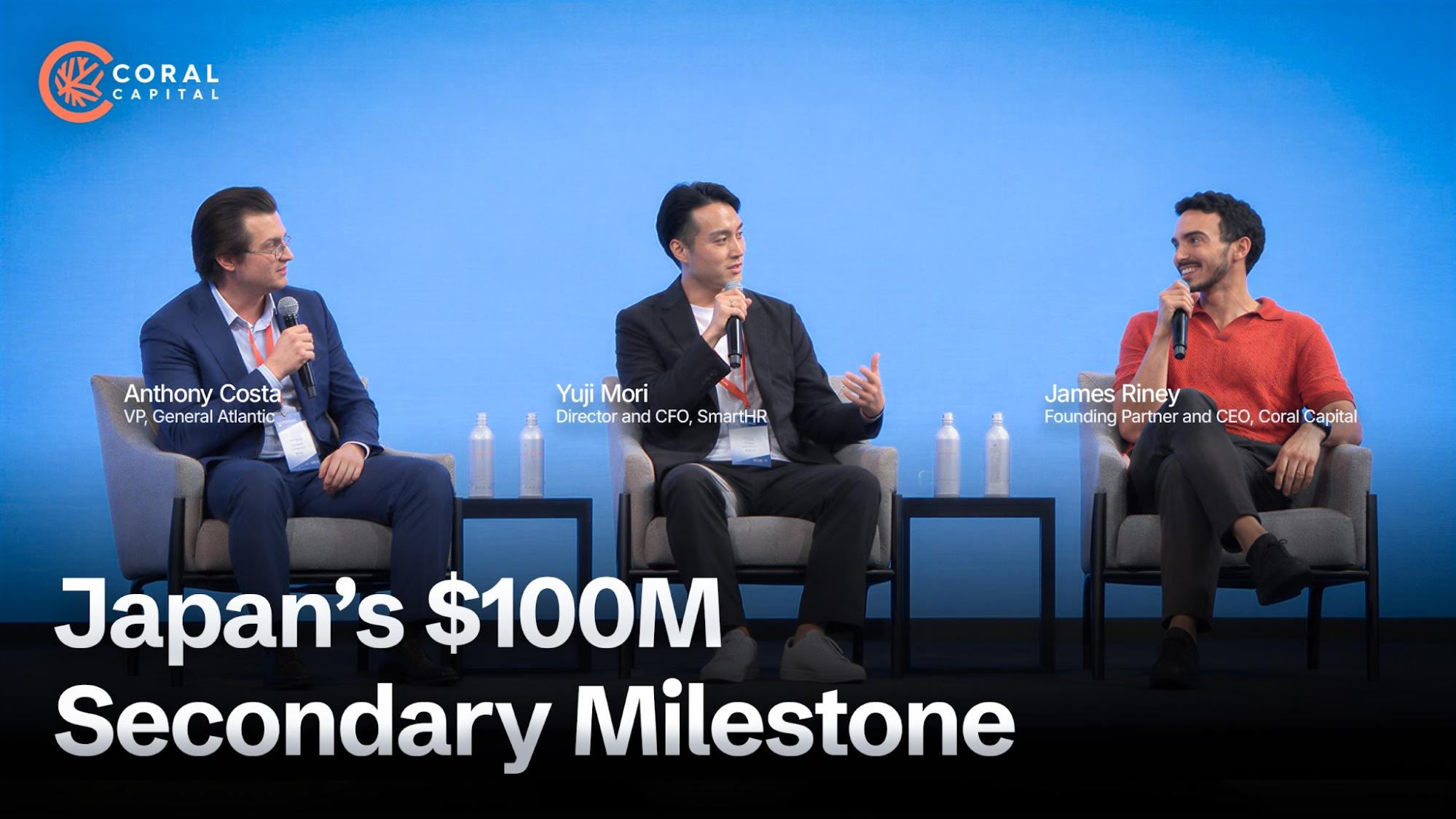
I recently joined Anthony Costa of General Atlantic and Yuji Mori, SmartHR’s CFO, for a panel moderated by Jordan Fisher at Japan Go IPO. We discussed how the transaction came together, why General Atlantic wanted to invest, how we approached pricing, and what other Japanese startups can learn from the process.
The conversation is now available as an episode of Build with Japan.
Watch or listen:
You can also read my original announcement for more background on the transaction.